Minecraft’s 15th anniversary celebrated with dynamic, playable web experiences
I led the product design and creative direction for a multi-phase Minecraft.net anniversary experience that invited players to uncover 15 years of stories, rewards, and franchise moments through play.
role
Product design lead and senior designer
team
Web design, art, engineering, production, content, marketing, analytics, accessibility, and localization
scope
Homepage takeover, anniversary hub, interactive timeline, cape and campaign discovery, and launch extensions
timeframe
Initial creative concept in 2022; experience design and delivery from 2023 through the May 2024 launch
the challenge
Minecraft’s anniversary needed to function as more than a campaign landing page. The website had to organize a large, changing program of news, offers, rewards, and history while still feeling unmistakably Minecraft. The work also had a fixed global launch date, multiple phases, strict brand and accessibility requirements, and more than 20 localized versions.
The experience
To properly celebrate such a momentous milestone for a game franchise, our 15th anniversary spanned across our website, launcher, and social media. To fuel the celebration we launched a limited cape, 15-days of free cosmetic items, a free custom map, and community activations. The multi-phase web experience roll-out anchored on these plans, so fans visiting the page always saw the most exciting happenings quickly and dynamically.
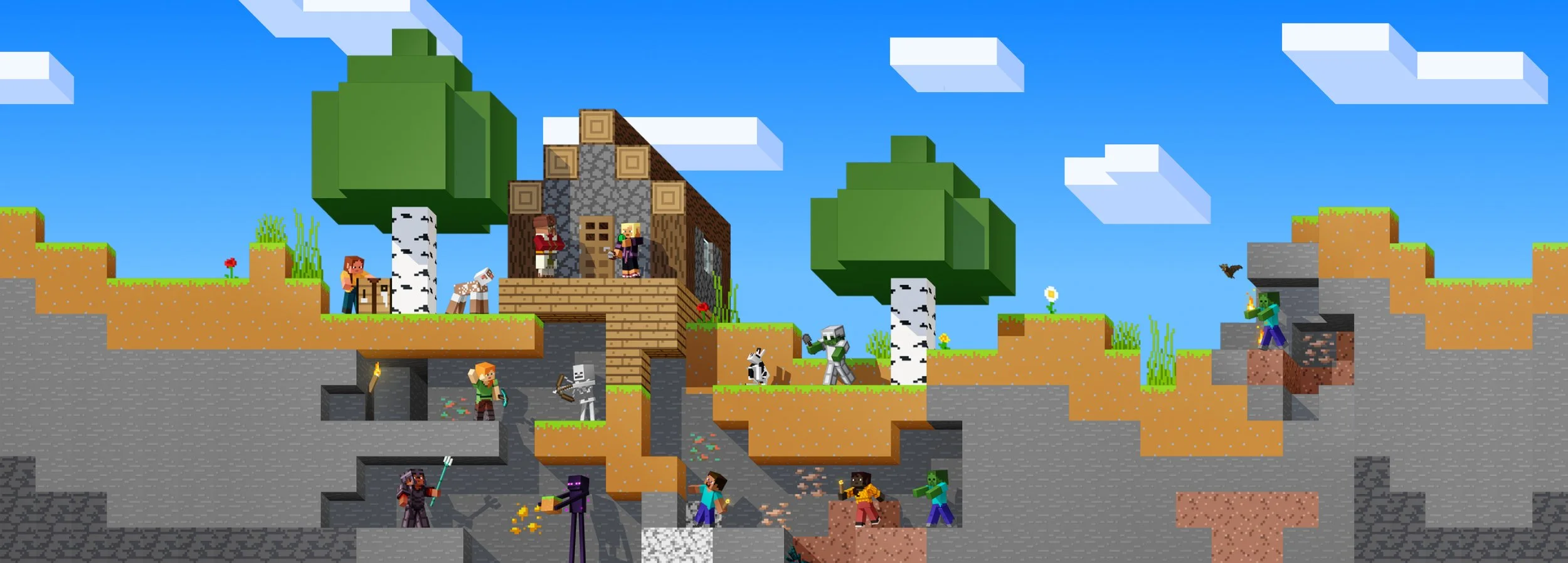
The 15th Anniversary hub page - expand to view in full
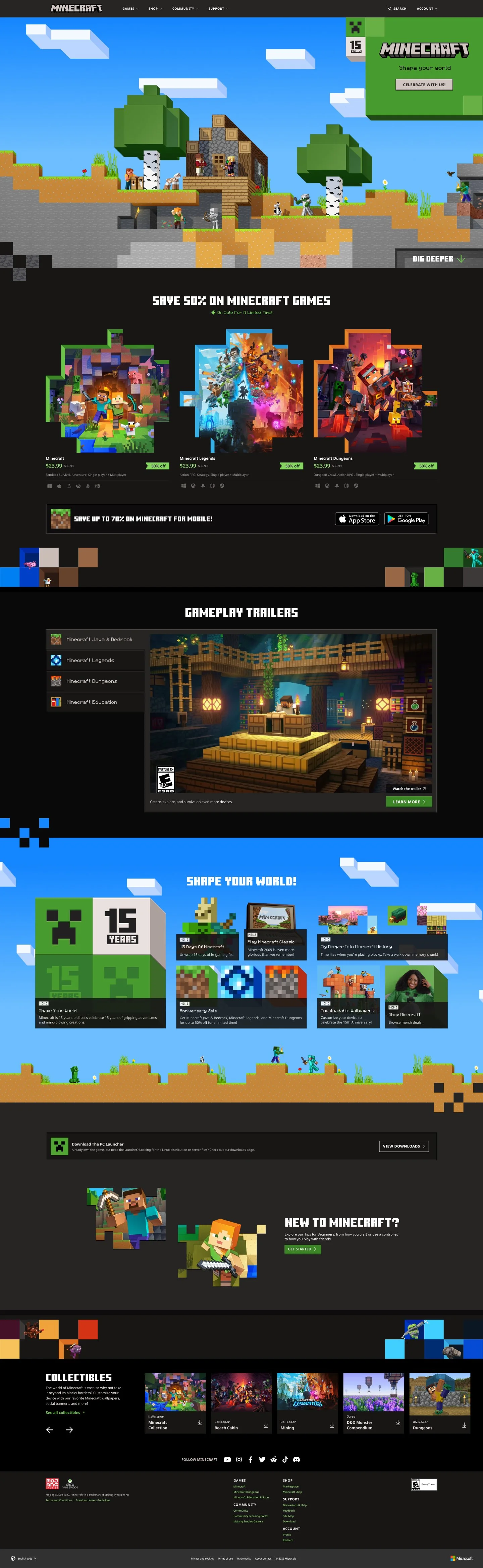
The 15th Anniversary homepage takeover - expand to view in full
turned the campaign idea into interaction
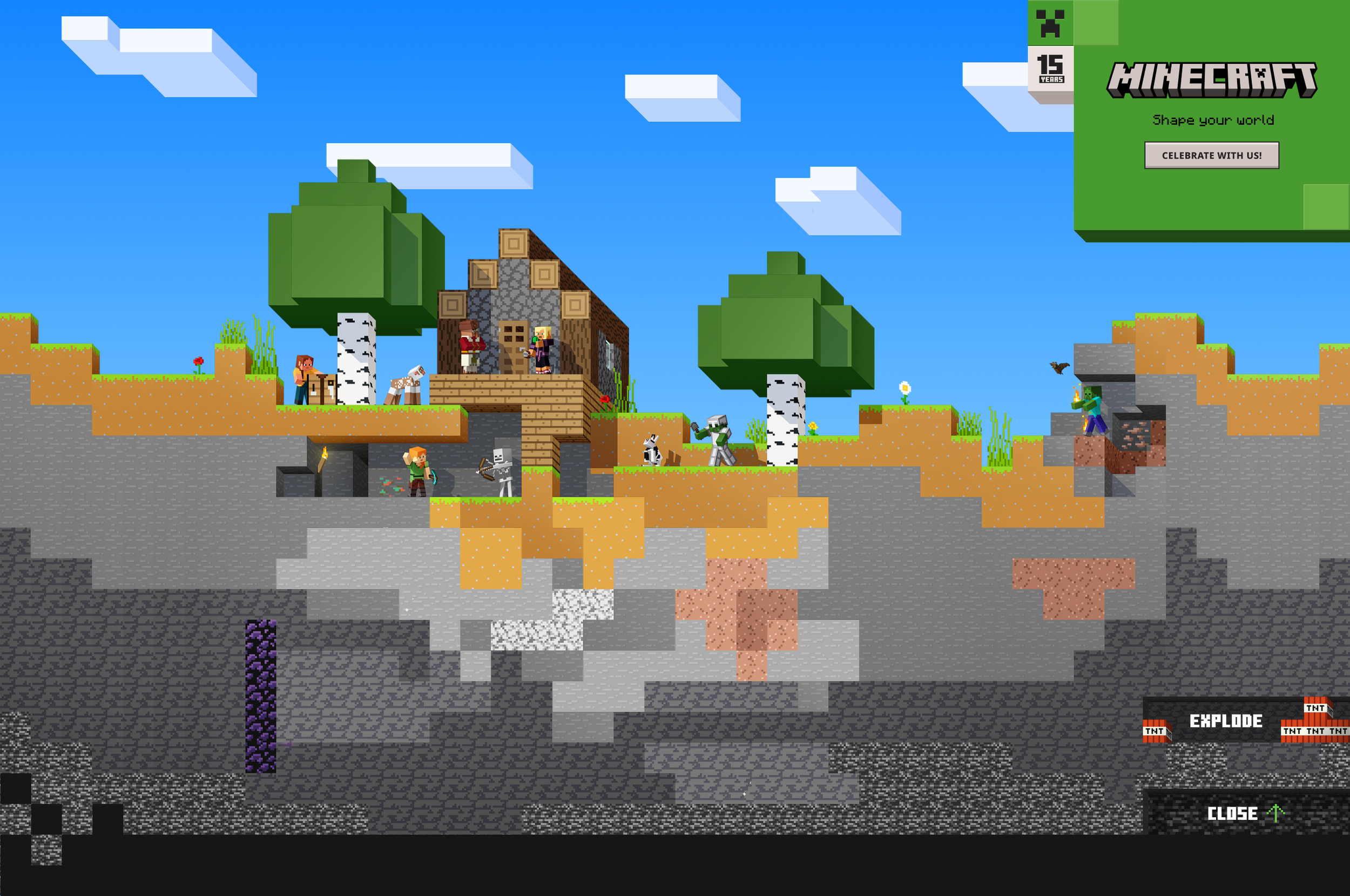
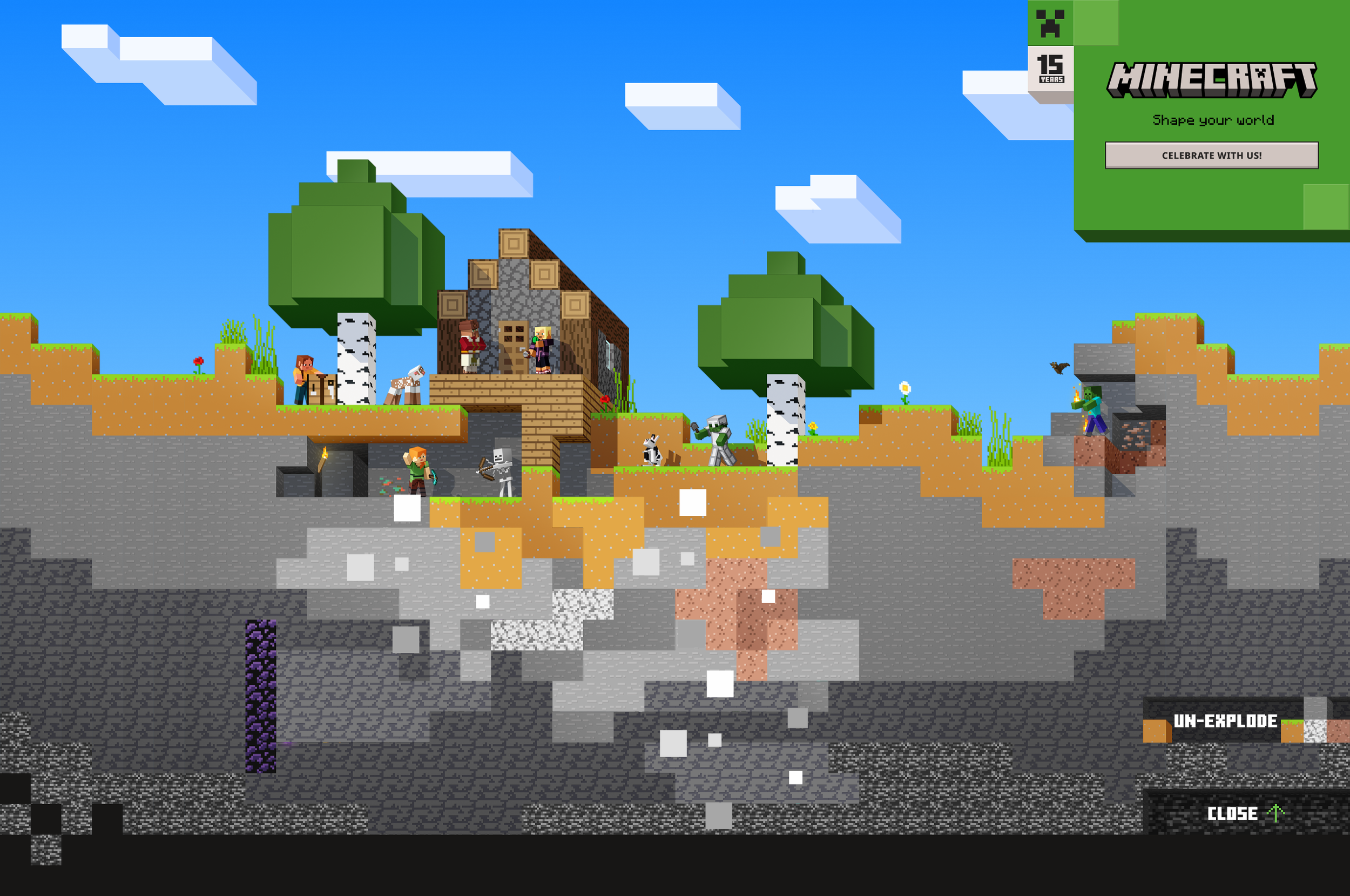
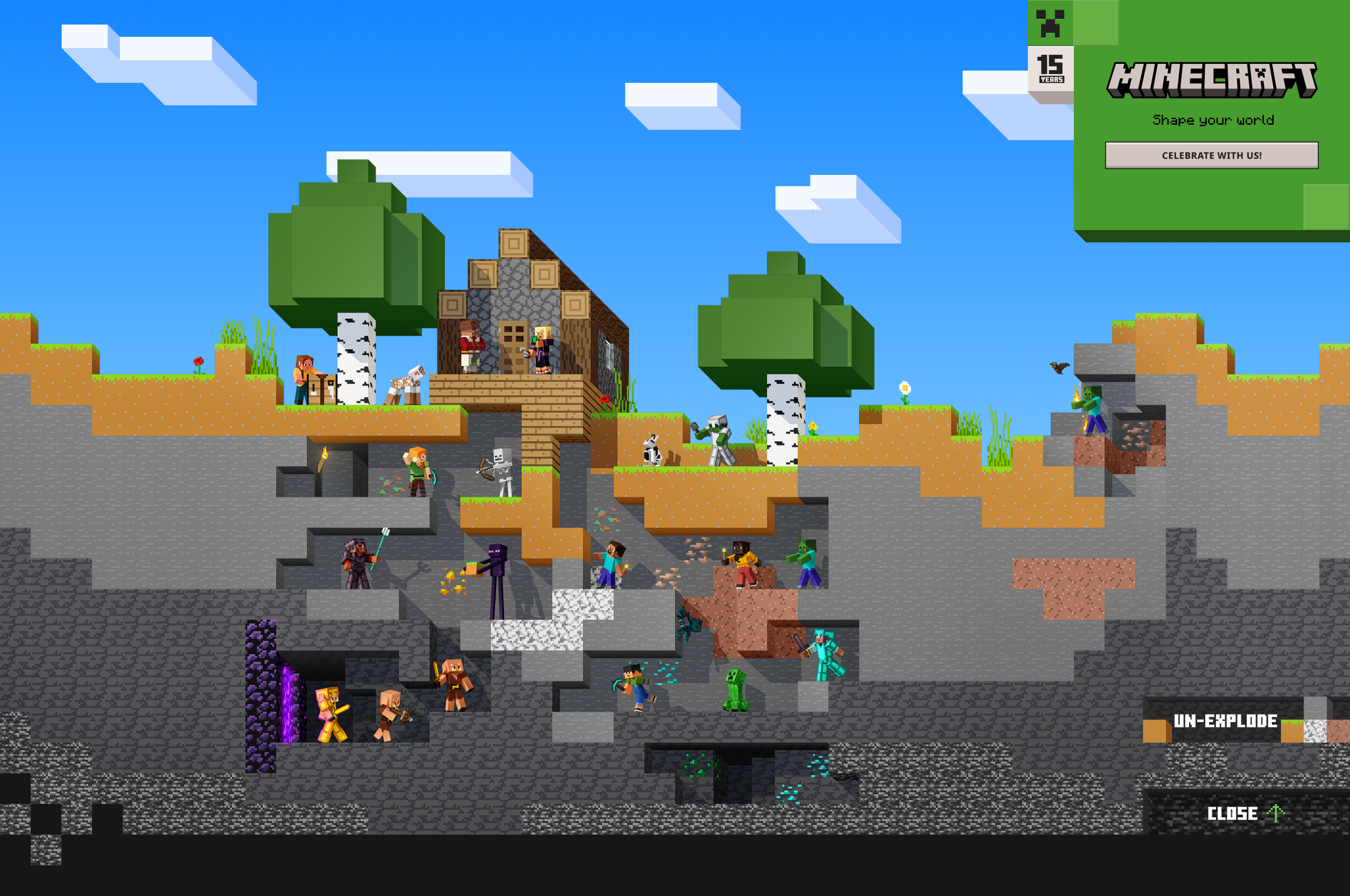
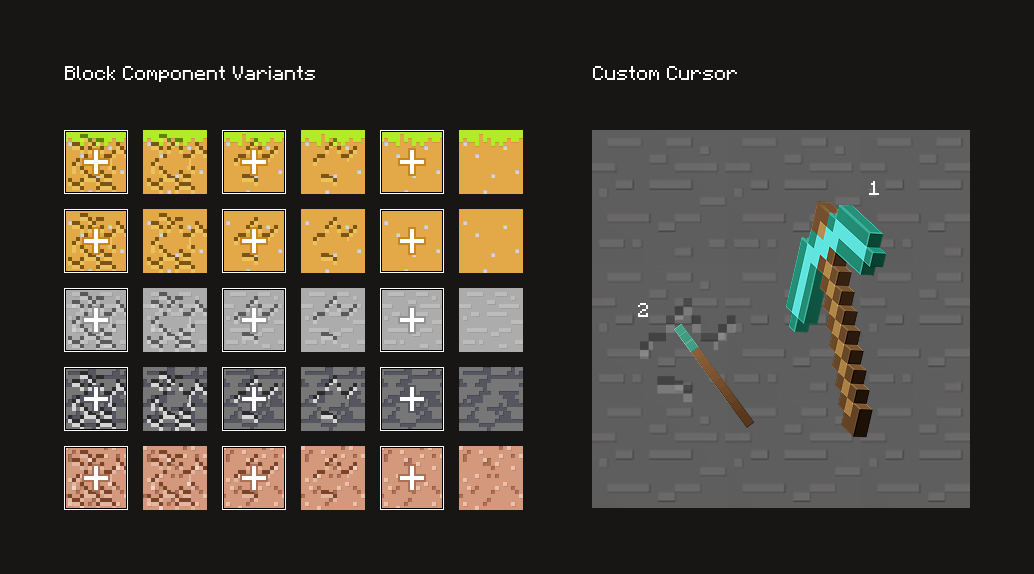
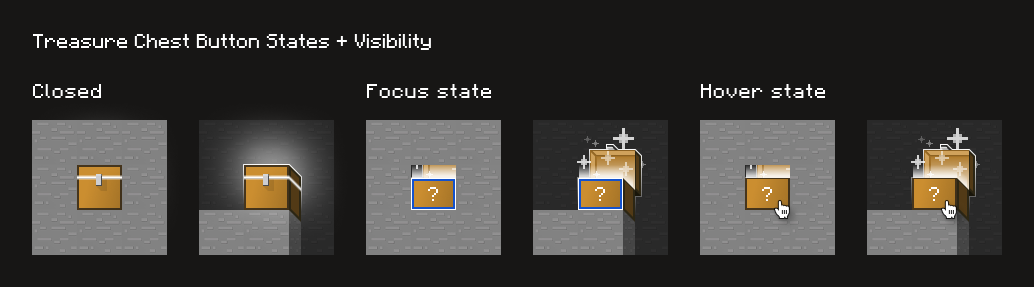
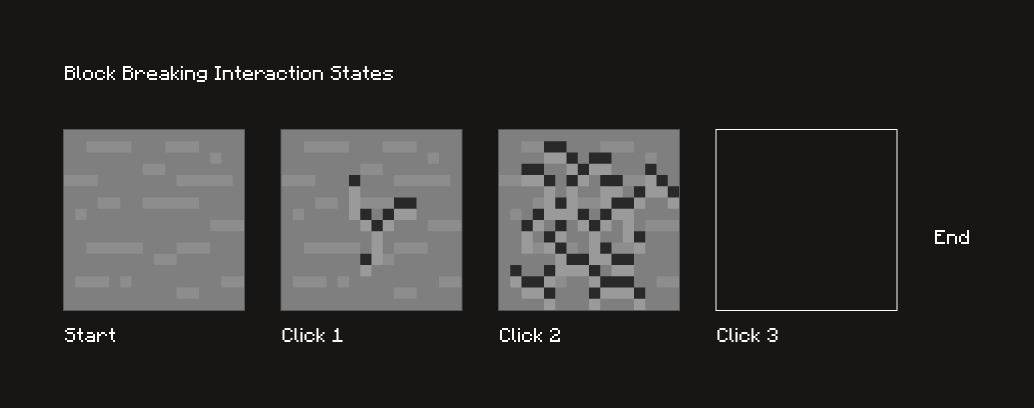
I reframed “Discover Your Minecraft” as a mineable homepage scene. Visitors could break blocks with a pickaxe cursor to reveal characters and treasure, while accessible controls allowed keyboard and screen-reader users to open or reset the scene.
accessible fun for all fans
Building an interactive mini-game-like experience on web was a goal many thought wouldn’t be possible without falling short on meeting the very high standards of accessibility we’ve set for ourselves. Despite the challenge, we met the bar and shipped a delightful experience that is responsive, accessible, performant and unmistakably Minecrafty.
a framework that art and engineering can build in parallel
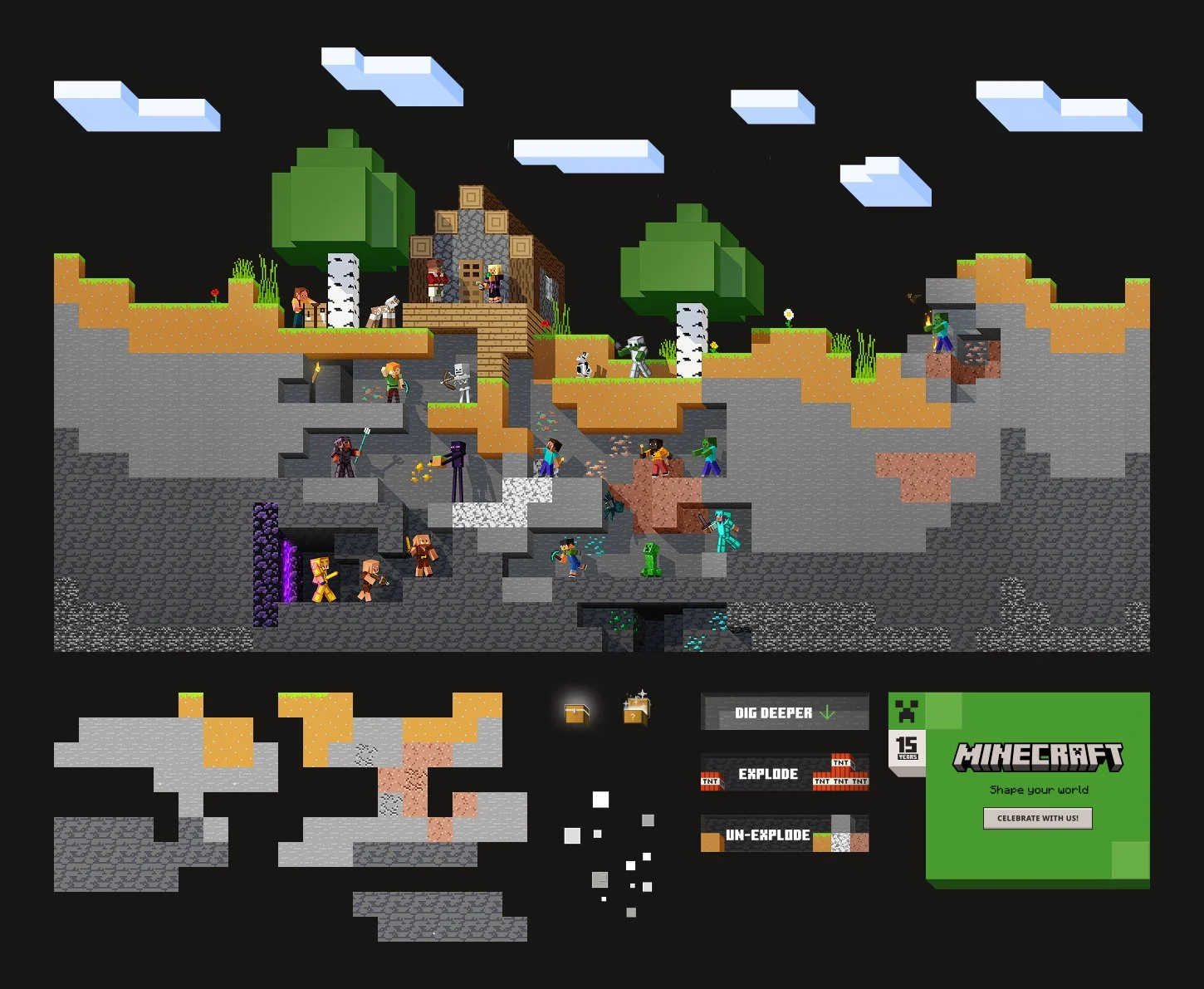
I prototyped the interaction with placeholder artwork, established the final composition and behavior, and handed the framework to engineering and artists together. This protected the schedule while leaving room for final visual craft.
thoughtful experiences drove deeper engagement
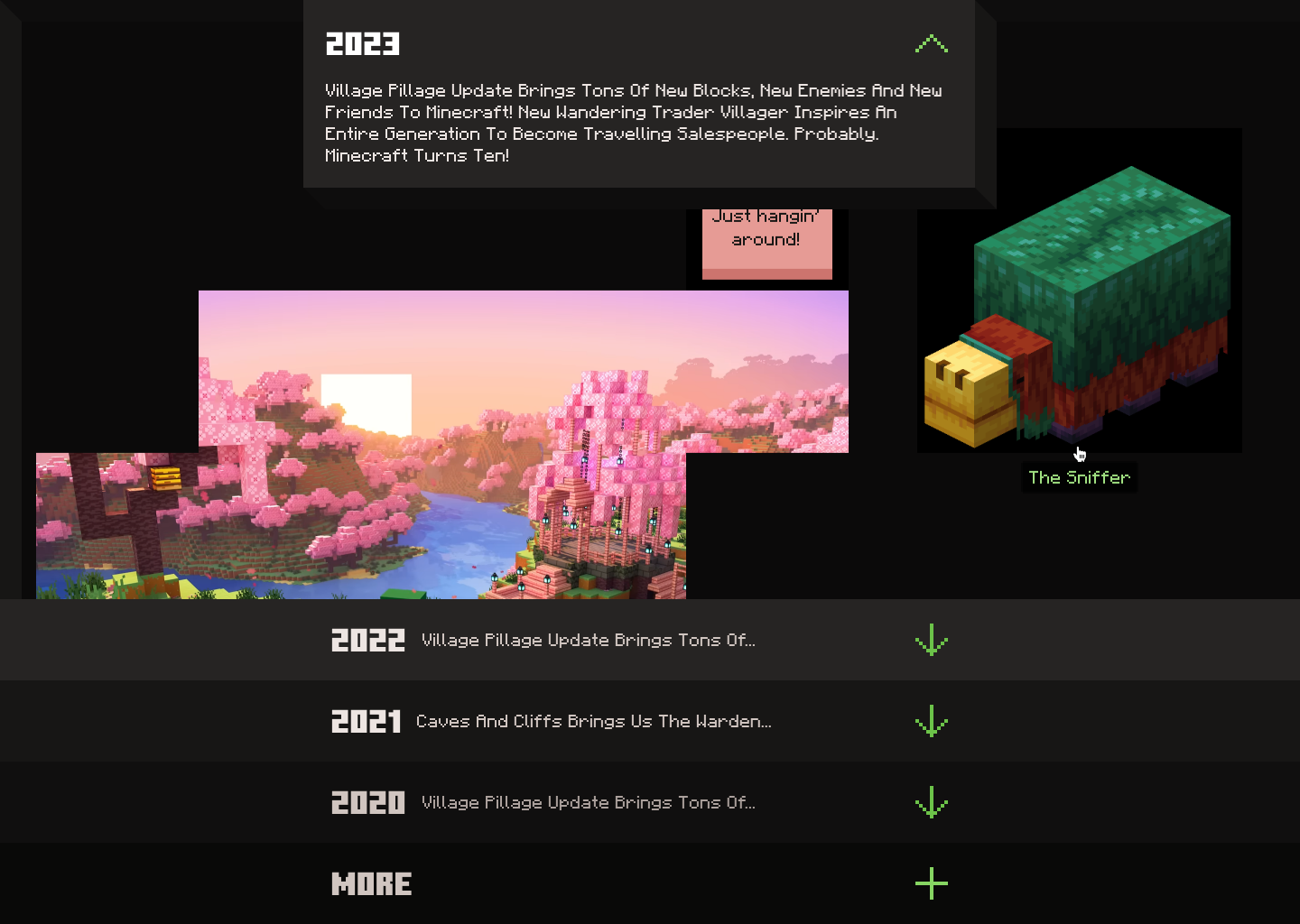
We shaped the anniversary hub into a rich editorial and interactive destination. The timeline, mineable UI, cape, collectibles, wallpapers, news, and Marketplace links gave fans different ways to explore, celebrate, and carry the experience into the game.
The hub reached 15M unique visitors, and anniversary content increased repeat visitation. News reached through the hub outperformed news reached through the homepage, while the experience drove measurable downstream interaction across commerce, Profile, Marketplace, and content.
Scroll-based animation brought the cape claim module to attention.
the cape turned celebration into participation
The anniversary cape became the hub’s most-engaged feature: 2.5M unique visitors clicked to claim it.
PADI’s subsequent analysis found that cape redemption increased retention by 2.1 percentage points—comparable to the impact of a gameplay update—while bringing new players into the franchise and Marketplace and increasing purchases.
An updated PADI analysis estimates that the anniversary capes generated roughly $400K in total business impact.
the outcome
+94%
Month-over-month traffic
+72%
Buy actions
+54%
Direct revenue
During the anniversary month, Minecraft.net traffic increased 94% month over month, buy actions increased 72%+, and direct revenue increased 54%+. A subsequent homepage experiment also found that the anniversary treatment sent 15k+ more visits to the anniversary experience than its control.
what I took forward
The larger lesson was that brand storytelling becomes more memorable when the interface behaves like the product, not merely like its advertising.