minecraft.net
minecraft web 2.0
I created Minecraft.net’s web vision and principles, designed the WebUI system and core journeys, and built a Figma library tied to reusable code and authorable modules.
Working with engineers and product owners, I helped bring more than 3,300 pages onto that foundation. It now supports experimentation, commerce, accounts, discovery, and franchise campaigns.
role
Web designer, product design lead, artist
partners
Engineering, product owners, art, production, content authoring, research, experimentation, accessibility, and implementation teams
scope
Web vision, design foundations, components, authorable modules, responsive layouts, brand theming, core journeys, and production guidance
timeframe
2022–2025 foundation and site migration; continuing evolution across franchise experiences
from a game site to a franchise destination
Minecraft.net started as a way to learn about the game and get playing. By 2022, it served a growing franchise, with more games to discover, products to buy, and reasons to return.
The redesign had to support all of that and still feel like Minecraft.
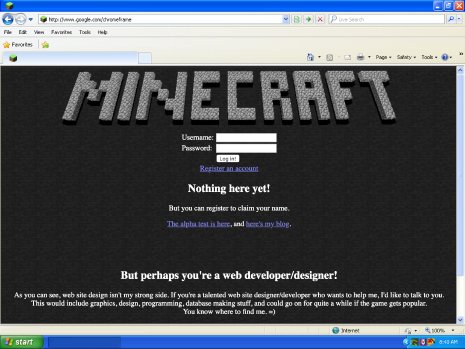
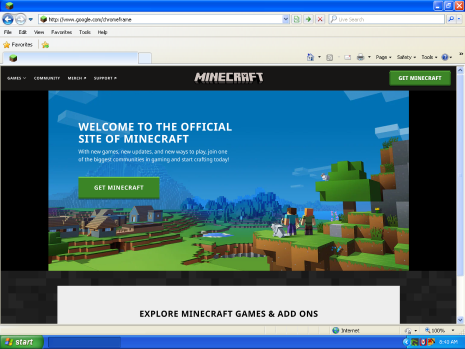
500 million yearly visitors. one connected foundation.
People come to Minecraft.net to discover the games, buy content, manage accounts, redeem codes, download software, or catch up on the news. Each visit has a different purpose.
Our job is to help people do what they came for while keeping the experience unmistakably Minecraft.
Since the 2016 redesign, the site had accumulated inconsistent interfaces, duplicated code, accessibility gaps, and hard-coded pages. Component ownership was often unclear. Building a new page meant solving familiar problems again, and the growing franchise made those problems harder to ignore.
the project
01 / crafting a shared vision
02 / building the design system
03 / delivering a new minecraft.net
01 / crafting a shared vision
web vision
For new fans and longtime players alike, Minecraft Web is the authoritative guide to the whimsical world of Minecraft. Its content keeps our growing community connected to the games and fuels their passion for them.
values and principles
Mojang values
Craft Together
Fuel Passion
Celebrate Creativity
Create Fun
Learn Together
Minecraft values
Inclusive
Immersive
Impactful
Creative
Unexpected
Design principles
Minecraft Starts with Vanilla
Strive for Simple
Be a Force for Good
Expand the Mystery
Whimsical yet Serious
UX principles
See the Big Picture
Player’s Perspective First
Keep it Immersive
Create a Fair Experience
Accessible to Everyone
Surface the Game
01 / crafting a shared vision
ux direction
Go beyond basic usability. Create memorable, enjoyable experiences that feel like Minecraft and give players a reason to come back.
experience filters
accessible
Treat WCAG 2.1 AA as the minimum target. Build accessibility into readable content, visible focus states, and layouts that work when people zoom in.
cohesive
The experience should feel like part of Minecraft. Shared structures and interactions connect the franchise, while each game keeps its own identity.
responsive
Keep the experience quick to load and usable on the screen in front of the player, wherever they’re playing.
comprehensive
Account for what happens outside the ideal path, including errors, localization, input limits, and different product states. The details matter.
delightful
Bring Minecraft to life through art, animation, and interaction. Leave room for surprise without getting in the way of the task.
user-centric
Start with the player’s perspective. Research and testing should guide decisions, help us weigh tradeoffs, and show us what needs to improve.
01 / crafting a shared vision
one destination, many ways to play
Fans from around the world come to Minecraft.net to learn about the games and expand the ways they play.
The site had to help people explore and get things done. They might be choosing a game, looking for inspiration, managing an account, downloading, or redeeming a code. I used six filters to keep those needs in view as the site grew.
direction filters
connective tissue outside the games
Give players ways to connect with Minecraft outside the games, through companion experiences, useful content, and each other.
frictionless, comprehensive commerce
Help people understand what they’re buying and make the purchase straightforward. Build trust at each step.
amplifies the franchise pulse
Keep visitors connected to what’s happening across the franchise. Be a reliable source without losing Minecraft’s whimsy.
discoverable
People should be able to find relevant content, get answers, and resolve issues without a struggle, whatever platform they use.
welcomes everyone
Welcome people of different ages, genders, backgrounds, and levels of experience with Minecraft.
celebrates the community
Give players, creators, teachers, and mentors a place to share their work. Help others find inspiration and ways to take part.
02 / building the design system
design system foundations
I began in 2022 by auditing and consolidating colors, button states, and typography. Those patterns became a design kit, then the broader WebUI system, which reached beta in October 2023.
atoms > molecules > organisms > layouts
Atoms define color, typography, iconography, spacing, artwork, branded motion, and six responsive scale modes.
Molecules turn those foundations into reusable building blocks, including buttons, inputs, accordions, filters, navigation, and media, with their interaction states.
Organisms combine those building blocks into modules that content teams can author.
Layouts arrange modules around a complete player journey.
one system, distinct game identities
Modular styles let the same structures take on the colors, typography, and details of Minecraft, Dungeons, Dungeons II, Legends, Realms, Marketplace, Education, and future brands. A new game can have its own identity without starting every interaction from scratch.
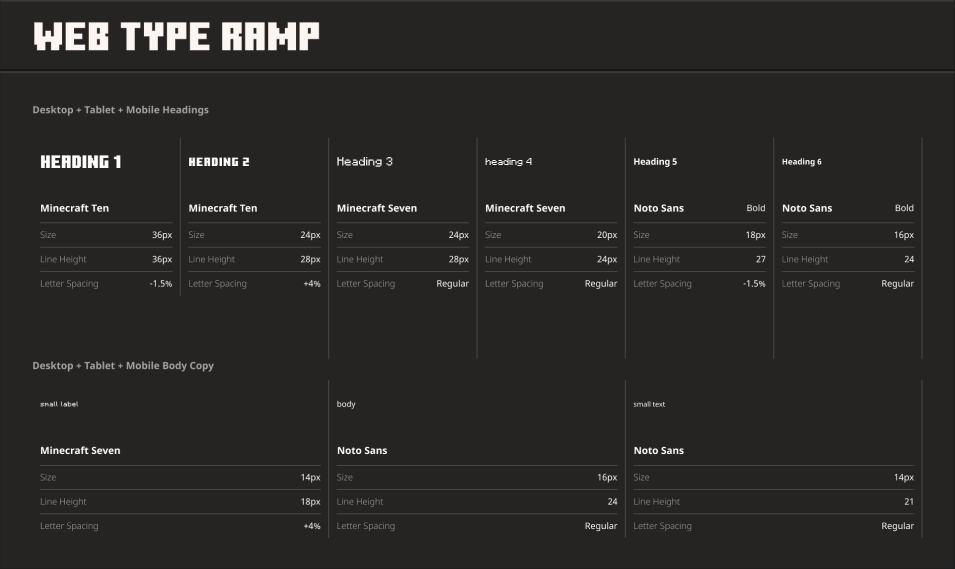

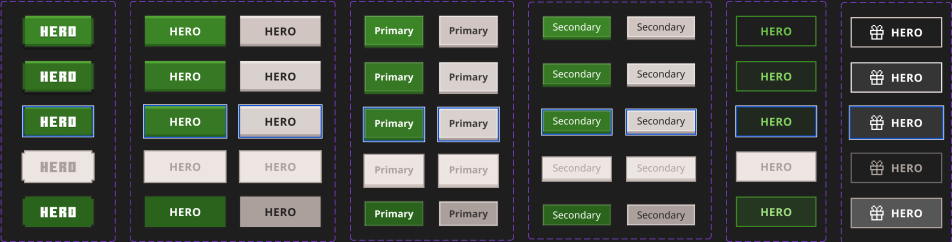
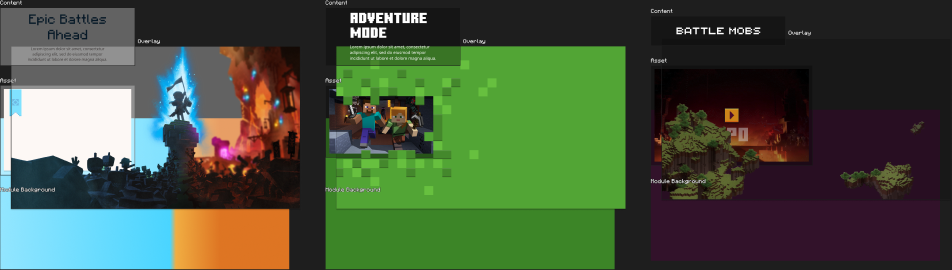
WebUI · a shared foundation for the franchise
101 components · 125 module patterns · 6 product themes
133 color tokens, branded motion, and reusable patterns for content, commerce, and CMS publishing.
a foundation for the whole player journey
WebUI now supports the homepage, navigation, search, profiles, game purchase pages, Marketplace, Minecoins, downloads, and code redemption. Each new journey gives teams more patterns they can reuse.
I designed the homepage to bring campaigns together with game discovery, trailers, news, learning, and collectibles. The navigation needed room for a growing franchise. Moving the Minecraft logo to the left made its relationship to the games and page content clearer.
The same system handles the practical tasks that bring players back. Profiles combine game cards with account actions and currency information. Download pages use platform tabs, artwork, instructions, and calls to action.
Different tasks, built from the same design language.
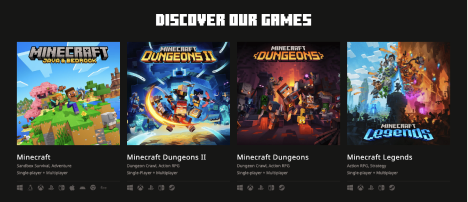
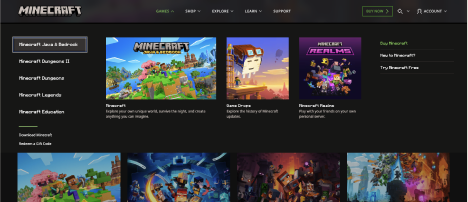
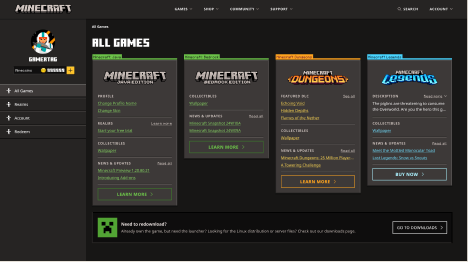
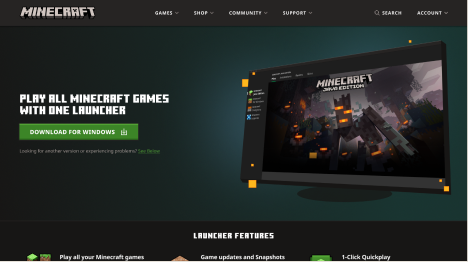
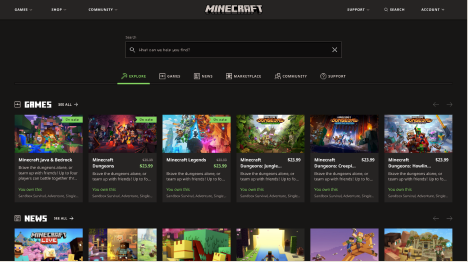
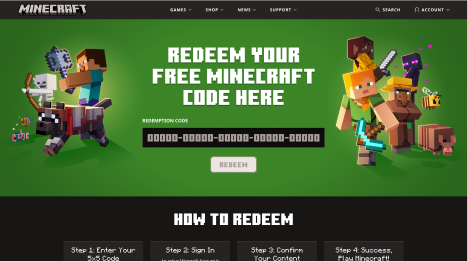
building new experiences from shared parts
Game marketing and purchase pages pair immersive artwork with information about gameplay, platforms, editions, and features. Visitors can explore through shared galleries or go straight to a purchase panel when they’re ready to buy.
These shared parts supported the purchase-page redesign, Marketplace commerce, and Minecoins on the web. Teams could spend more time on the purchase journey because the controls, responsive behavior, and brand treatments were already in place.
Campaigns had room to try new things, too. The 15th anniversary and Dungeons II could introduce new stories and interactions while still feeling at home within the franchise.
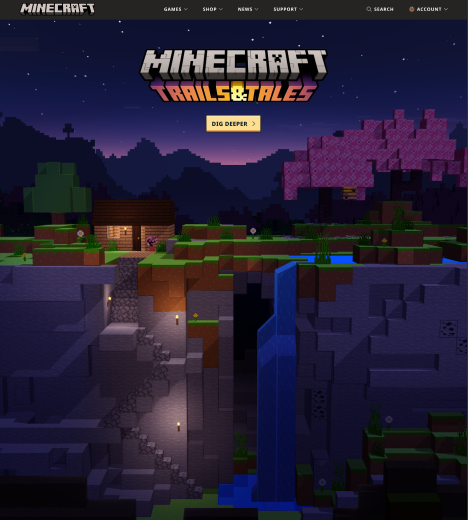
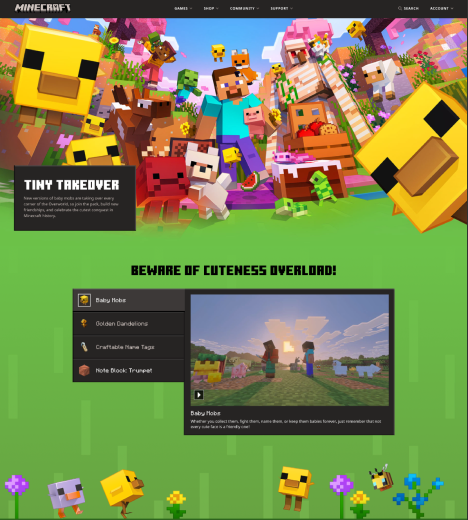
projects made possible by WebUI

experiment, ship, learn, refine, and reuse
We shipped in phases. The homepage and navigation reached players by spring 2024. Search followed as a navigation experiment that August, and the redesigned Marketplace launched on the new platform in May 2025.
Teams could test a new treatment without rebuilding the behavior underneath it. Reusable modules made it easier to compare alternatives and apply what we learned.
the impact of iteration
Tim Mehta, the experimentation PM, and engineer Adam Granzer run the experimentation program built on WebUI.
In FY26, the program ran more than 20 tests per quarter, generating eight-figure annual revenue gains and preventing six-figure annual revenue losses. The team applies what it learns across the site.
the outcome: a site that’s easier to build on
3,300+ pages migrated
By June 2025, the team had migrated more than 3,300 pages. I led the web vision, system design, core experience design, and production guidance. Engineers, product owners, and delivery teams brought that work into production.
5 days to release, about 90% fewer blocking bugs
Engineering reported one release delivered in five days, compared with a typical six-to-eight-week cycle.
In FY26, pages shipped on WebUI had about 90% fewer blocking bugs than pages built on the previous architecture, which had required frequent fixes and rework.
one investment, many experiences
Game pages, news, accounts, shopping, Marketplace, Minecoins, downloads, code redemption, and campaigns now share a foundation. Improvements made for a new game can carry into other experiences that use the same WebUI patterns.
next: a franchise SDK
The next step is to develop WebUI into an SDK for use across franchise web surfaces and beyond. Shared foundations, behavior, and themes give us a starting point for that work.
built to keep evolving
I started with the website’s smallest elements. Together, we turned them into a foundation teams can keep building on.
With repeatable decisions settled, teams can spend more time on the experiences and stories that bring players into Minecraft. Each release gives us a chance to make the site better.
Projects

minecraft dungeons ii launch
minecraft 15th anniversary
minecraft marketplace redesign
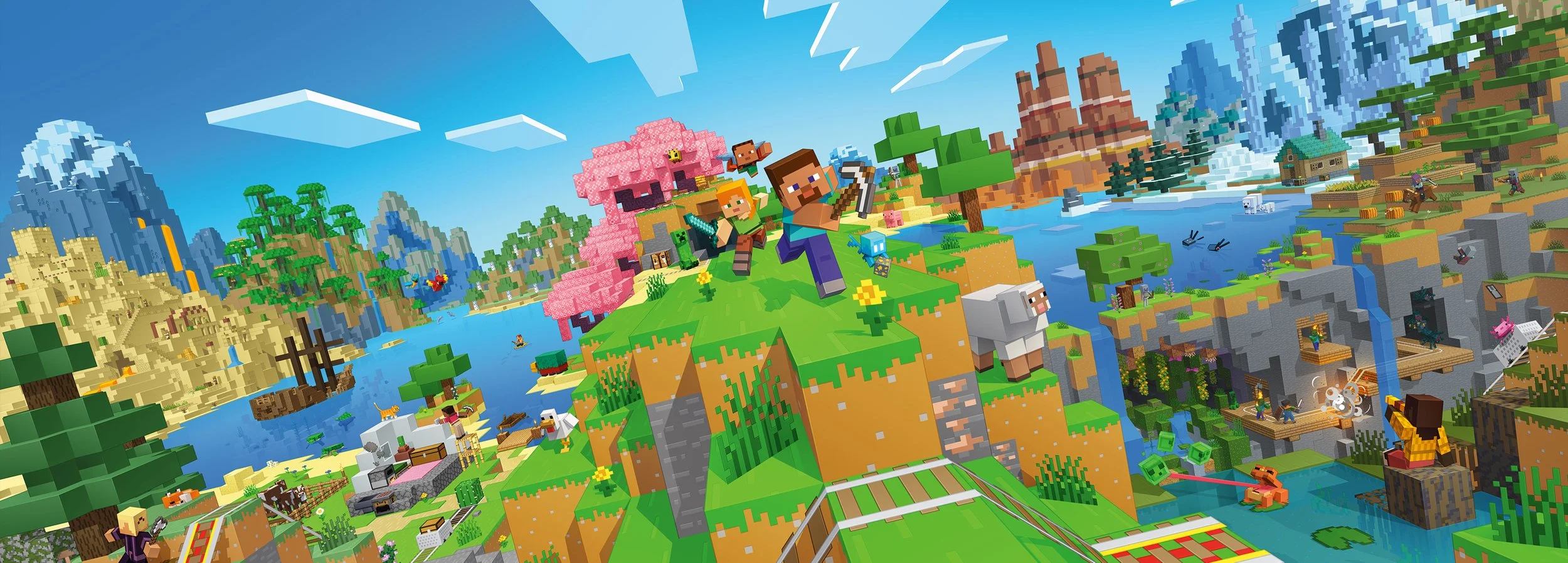
minecraft.net purchase redesign
minecoins on web

minecraft dynamic hero
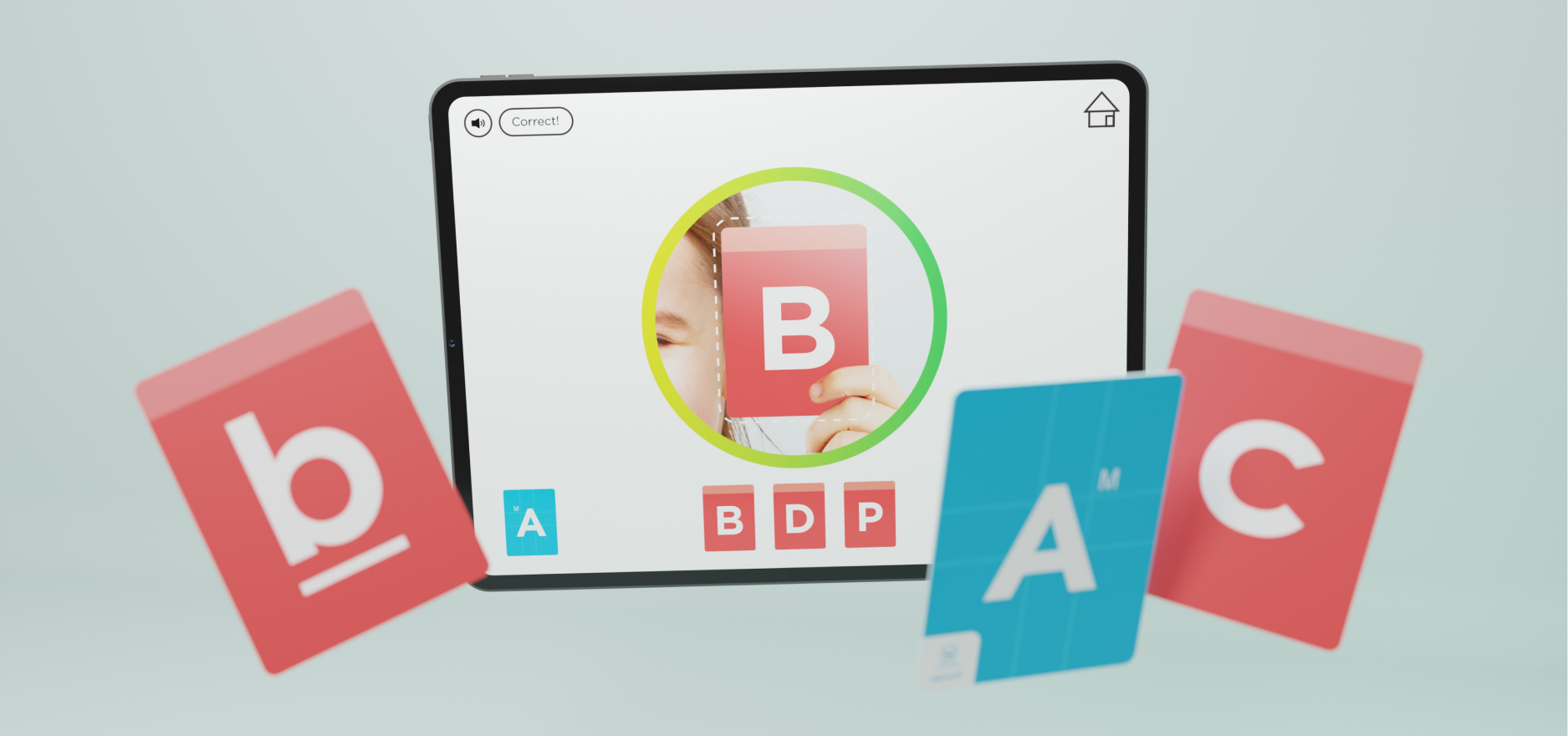
tooder

warlocks

voice of the theater
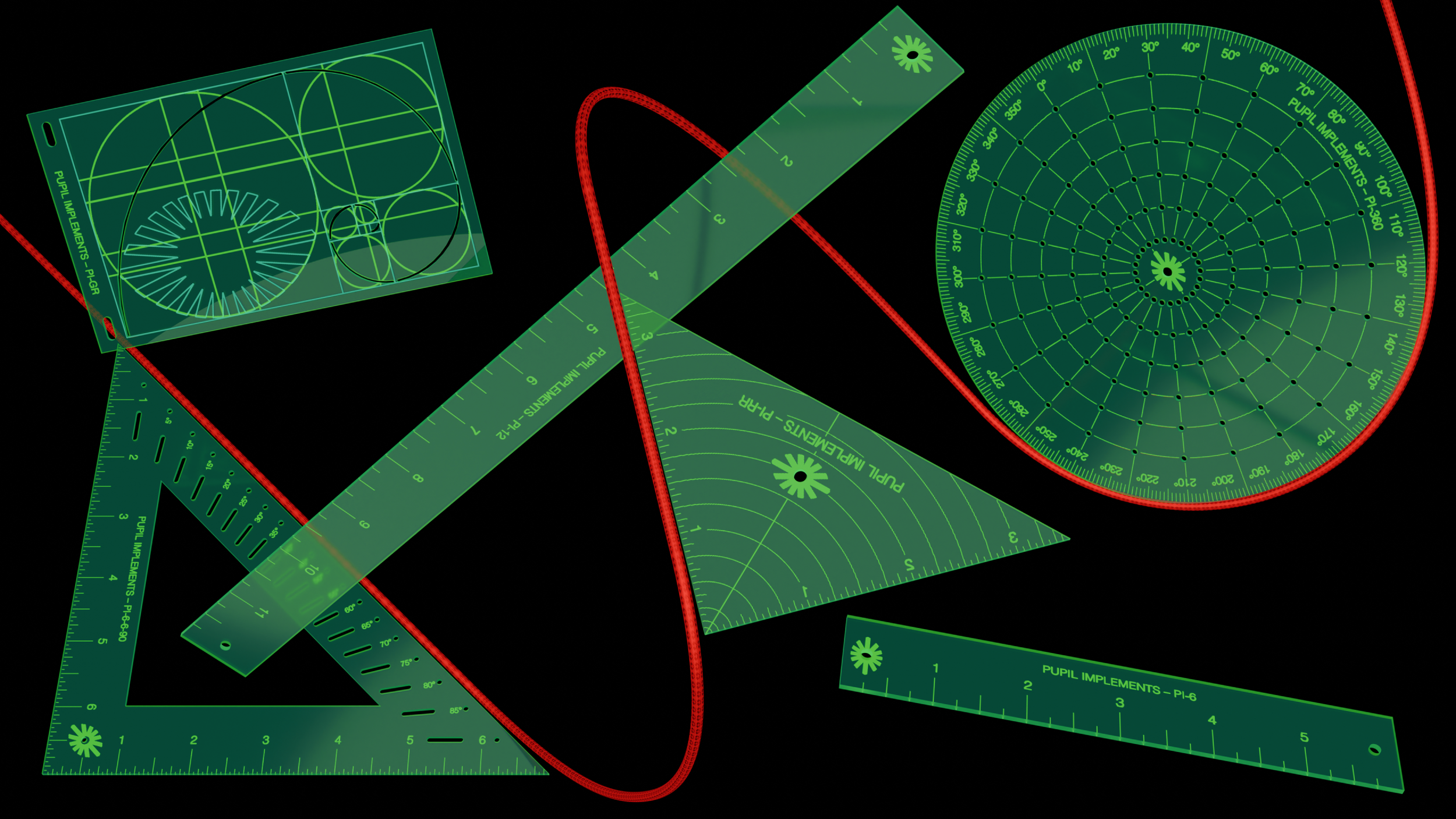
pupil implements

screen prints

voyager ii

cpu-2

voyager i